History of Arabic Calligraphy — From Kufi Origins to Modern Digital Art
Arabic calligraphy is one of world great traditions art . For over fourteen centuries it has served as primary visual form art of Islamic civilization — on appearing mosque walls, in royal manuscripts, on coins and textiles carved stone into and painted on ceramics. In 2021 UNESCO Arabic calligraphy added to its Representative List of the Intangible Cultural Heritage of Humanity, recognizing its unique place in culture global . calligraphy Arabic
Understanding history of arabic calligraphy is not merely an exercise academic . It is essential context for anyone working with the art form today — whether as a learner, a designer, or simply someone who wants to understand why the scripts way look they do and why they matter. This guide covers the complete timeline from pre-Islamic origins to the tools digital of 2026. Ibn Muqla
Pre-Islamic Writing history of arabic calligraphy
Before Islam existed Arabic writing but was not considered a prestige form art. known earliest history of arabic calligraphy inscriptions date to the 4th century CE and derive from script Nabataean — the writing system of kingdom Nabataean centered in Petra. Nabataean was itself derived from Aramaic, placing early Arabic within the broader writing Semitic tradition.
These early inscriptions were rather functional than artistic. They recorded dates , names and transactions. The script was inconsistent, lacked letterforms standardized and had not yet developed the rules of connection and proportion that would later define calligraphy history of arabic calligraphy .
By the 6th century CE two regional variants history of arabic calligraphy were in use: the Hijazi script in Arabia western (the region of Mecca and Medina) and various cursive forms in north. Neither had visual achieved sophistication that was about to emerge.
The Birth of Islamic Calligraphy — Century 7th
The revelation of the Quran to the Prophet Muhammad beginning in 610 CE transformed history of arabic calligraphy from a functional tool into a sacred art form. The first word revealed — “Iqra” (اقرأ), meaning “Read” — established an immediate connection between the divine message and the act of writing.
As the Quran was written down and distributed, the question of how to write it became a question of the highest spiritual importance. The text of God’s word required a script worthy of its content. This drove imperative the development of history of arabic calligraphy craft from into an art — and eventually into the supreme visual art of Islamic civilization. UNESCO intangible heritage cultural
The formal earliest history of arabic calligraphy style was Kufic, named after city of Kufa in modern-day Iraq. Kufic is angular and monumental, with horizontal bold strokes and geometric letter structures that give it an architectural quality. The earliest Quran manuscripts were written in Kufic and it remains closely associated with early identity Islamic .
forms Kufic angular were well-suited to writing with nibbed broad reed pen on parchment and to in stone carving . Its clarity geometric made it legible at a distance which is why it was used for inscriptions early mosque and coins. However, Kufic was difficult to quickly write and did not well adapt to flowing, connected handwriting needed for everyday correspondence. Kufic and regional variations style
Kufic’s geometric structure also influenced regional script traditions across the Islamic world — to explore how Kufic
evolved alongside Jawi, Nastaliq, and other regional styles, see the complete guide to Kufic and regional style variations.
The Golden Age Caliphate Abbasid 8th–10th Century
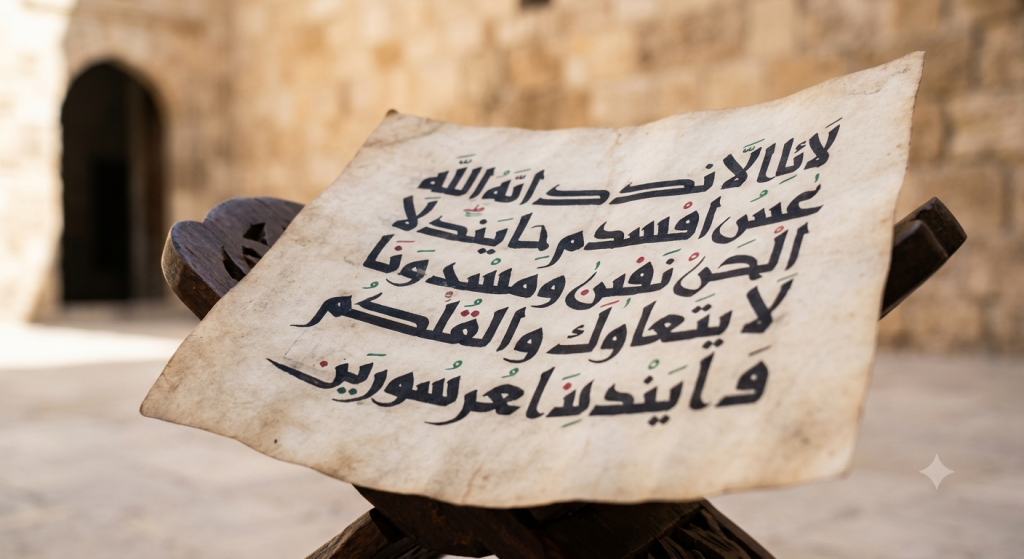
The Caliphate Abbasid which moved the center of power Islamic from Damascus to Baghdad in 750 CE, presided over age golden of history of arabic calligraphy. Baghdad became cultural and capital intellectual of the world and its court and scholars invested resources enormous in art of writing.
The most development significant of this period was work of Ibn Muqla (886–940 CE) widely considered the father of Arabic calligraphy classical . Ibn Muqla was a vizier to three caliphs Abbasid and calligrapher of extraordinary skill. He developed the first proportional systematic theory of history of arabic calligraphy script — a geometric method based on rhombic dot as a fundamental unit of measurement.
In Ibn system Muqla every letter is proportioned relative to the dot made by pen nib. The letter alif (ا), for example, is defined as a specific number of dots in height. Every other letter is relative proportioned to alif. This foundation mathematical transformed Arabic calligraphy from a craft based on style personal into a discipline with objective standards of excellence. Abbasid Caliphate
Ibn Muqla is credited with six scripts codifying classical— known in Arabic as al-aqlam al-sitta : Naskh, Thuluth, Muhaqqaq, Rayhani, Tawqi and Riqa. Each had a specific purpose, proportion system and context appropriate . This six-script framework history of arabic calligraphy organized for next thousand years. all classical Arabic calligraphy styles
The Ottoman Era — Peak of Art Calligraphic (16th–19th Century)
The Empire Ottoman, which at its peak territory controlled from Vienna to Baghdad and from the Sea Black to North Africa became the patron greatest of Arabic calligraphy in history of arabic calligraphy. Istanbul replaced Baghdad as the world center of the art, and Ottoman calligraphers refined and elevated the classical tradition to its highest expression.
The most important figure of this period was Şeyh Hamdullah (1436–1520), the calligrapher to Sultan Bayezid II. Şey Hamdullah Naskh and Thuluth reformed both creating standardized letterforms of extraordinary elegance that became the reference – standard for these scripts in the tradition Ottoman . His work Arabic calligraphy influenced for the next centuries five . Thuluth vs Naskh in detail
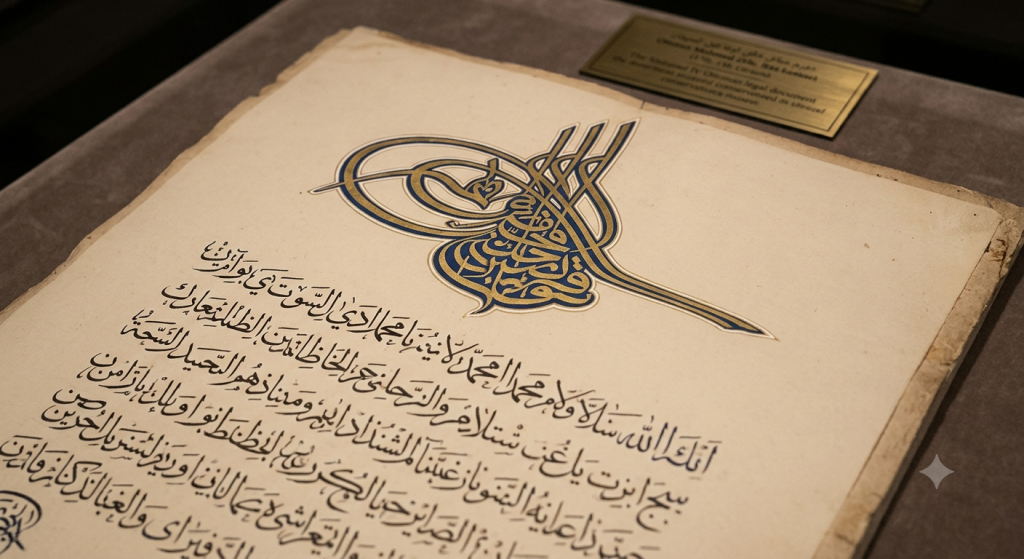
The Ottoman court also developed Diwani script, created specifically for imperial documents and correspondence. Diwani is distinctive for its rounded, flowing letterforms and its use of elaborate ligatures. It was designed to be difficult to forge — the complexity of the script made unauthorized reproduction nearly impossible. The imperial tughra — the sultan’s monogram used to authenticate royal decrees — was a Diwani composition of extraordinary complexity and remains one of the most recognizable symbols of Ottoman visual culture. Ottoman Empire
Ottoman architecture of this period used calligraphy as a structural visual element at a scale never seen before. The Blue Mosque (1616), the Süleymaniye Mosque (1558), and dozens of other imperial buildings in Istanbul were decorated with calligraphic inscriptions covering walls, domes, and arches. These inscriptions were not merely ornamental — they were architectural in scale and compositional ambition.
The Persian and Nastaliq Tradition
While Arabic calligraphy developed along one trajectory in the Arab world and Ottoman Empire a parallel tradition emerged in Persia. Nastaliq script was developed in the 14th century traditionally attributed to Mir Ali of Tabriz. It combined elements of Naskh clarity with flowing diagonal movement of Taliq an earlier Persian cursive script.
The result was script of extraordinary lyrical beauty. Nastaliq moves diagonally across the page with letters descending from right to left in a cascading flow that mirrors the movement of Persian poetry itself. It became the standard script for Persian literature and has remained dominant in Iran, Afghanistan and Pakistan for over six centuries.
The Nastaliq tradition produced some of the greatest calligraphers in history of arabic calligraphy. Mir Imad al-Hasani (1552–1615) is considered the greatest Nastaliq calligrapher of the classical period and his work remains a standard reference for students of the style today. In Pakistan and Iran, Nastaliq is still the primary script for Urdu and Persian text and contemporary Nastaliq calligraphers command enormous respect and significant commercial demand.
Calligraphy in Architecture:
No account of Arabic calligraphy history of arabic calligraphy is complete without addressing its role in architecture. In the Islamic world, calligraphy fulfilled a function in sacred buildings that figurative art served in Christian and Hindu traditions it was primary visual medium for communicating spiritual content in physical space. Islamic calligraphy art
The Alhambra palace in Granada Spain 14th century is covered in inscriptions calligraphic in Naskh and Kufic . The phrase “La Ghalib Illa Allah” There is no victor but appears God hundreds of times throughout the complex. The Dome of Rock in Jerusalem 691 CE, one of the oldest Islamic buildings surviving, Kufic inscriptions features that remain among the most important early examples of art.
Al Azhar Mosque in Cairo founded in 970 CE and one of the oldest universities in the world, has inscriptions accumulated calligraphic across twelve centuries of construction, offering a visual history of history of arabic calligraphy development on a single site.
The Modern Era 20th Century:
The 20th century brought both renewal and crisis to Arabic calligraphy. The introduction of Arabic moveable type printing in 19th century initially threatened the tradition printed text was faster, cheaper and more consistent than hand lettered script. Many predicted that calligraphy would become obsolete. learn traditional calligraphy techniques
Instead Arabic calligraphy transformed. In 1960s and 1970s generation of Arab graphic designers began integrating calligraphy with modernist design principles. Artists like Hassan Massoudy, Mahmoud Darwish poet whose name became inseparable from calligraphic interpretation and Egyptian numerous, Lebanese and Iraqi designers created new visual language that drew on tradition classical while addressing contemporary audiences.
In 2021 UNESCO added Arabic calligraphy to its Representative List of Cultural Intangible Heritage of Humanity. There inscription recognized tradition across multiple countries Saudi Arabia, Egypt, Morocco, Algeria, Sudan, Iraq, Jordan and others acknowledging that Arabic calligraphy is not property of any single nation but human shared achievement.
The Digital Era and AI Calligraphy:
Digital technology presented a new challenge for Arabic calligraphy how to render a script governed by contextual shaping rules, proportional systems and thousands of years of refinement aesthetic using the binary logic of software. Early attempts at digital Arabic typography were largely unsuccessful letterforms were rigid, the connections were mechanical and result looked nothing like hand written calligraphy.
Modern Arabic calligraphy tools have solved many of these problems. Tools like Arabic Calligraphy Generator use sophisticated font systems that account for contextual letter shaping, correct joining behavior and spacing proportional producing output that reflects genuine calligraphic tradition rather than generic typography.
For the first time in history of arabic calligraphy anyone with access to a browser can produce authentic Arabic calligraphy in Kufic, Naskh, Thuluth, Diwani, Nastaliq and other styles classical instantly and for free. This democratization does not replace the master calligrapher just as photography did not painting replace. But it makes tradition accessible to hundreds of millions of people who would never otherwise encounter it.
The history of arabic calligraphy is a history of adaptation. It adapted to Islam spiritual demands in 7th century. It adapted to imperial ambitions of the Abbasids and Ottomans. It adapted to printing in the 19th century and to graphic design in the 20th. Its adaptation to digital tools in the 21st century is simply the latest chapter in a tradition defined by its capacity for renewal.
Conclusion:
Arabic calligraphy has endured for fourteen centuries because it is not merely decorative. It is living connection between language, meaning, spirituality and visual art. Every letter in every style carries within it the decisions accumulated of hundreds of calligraphers across hundreds of years decisions about proportion, spacing, connection and beauty. start learning Arabic calligraphy
When you use Arabic Calligraphy Generator to write your name or phrase in Thuluth or Diwani, you are participating in that history of arabic calligraphy. The tool is modern. The art form is ancient. Together they keep the tradition alive for next generation.
Explore Arabic calligraphy styles from across history of arabic calligraphy →