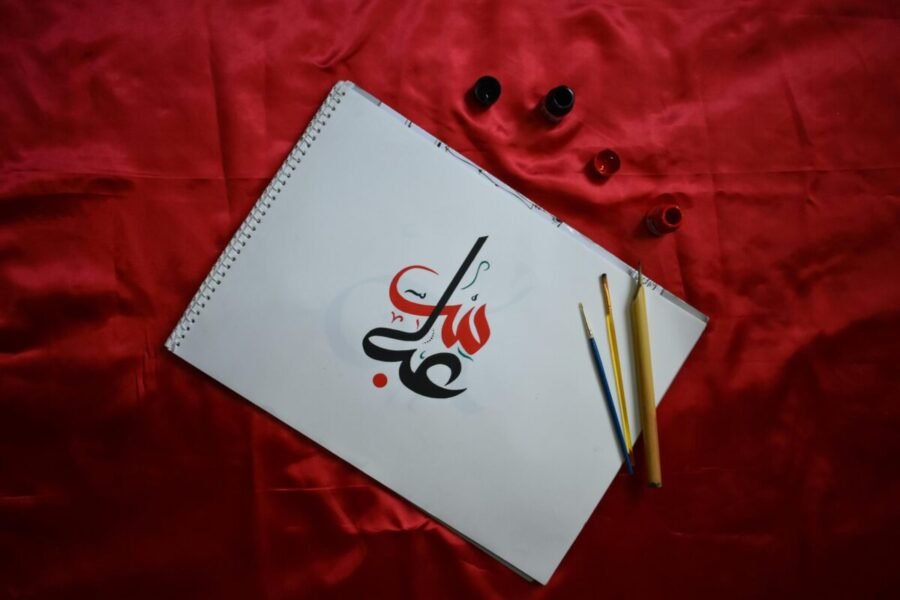
Easy Arabic Calligraphy—Learn Arabic Calligraphy Writing
Arabic calligraphy is one of the oldest and most respected art forms in the world. For centuries, skilled calligraphers shaped letters into flowing masterpieces that decorated mosques, manuscripts, and royal courts. Today, more people than ever are discovering this ancient art—and many are surprised to find that getting started is far more accessible than they imagined.
If you have ever looked at Arabic script and thought it was too complex or too different to ever attempt, this guide is for you. You do not need to speak Arabic, own expensive tools, or have a background in art. All you need is patience, a little structure, and the right starting point.
What Makes Arabic Calligraphy Unique?
Before picking up a pen, it helps to understand what makes Arabic calligraphy different from the writing systems most people grew up with. Arabic is written from right to left, which already feels unfamiliar to many beginners. But the deeper difference lies in how letters connect.
Unlike printed English letters that stand independently, Arabic letters change shape depending on where they appear in a word. A letter at the beginning of a word looks different from the same letter in the middle or at the end. This means you are not simply memorizing 28 shapes—you are learning how those shapes flow and adapt as part of a living, connected system.
This connectivity is also what makes Arabic calligraphy so visually powerful. Words move like water across the page. Lines breathe and curve in ways that feel intentional and graceful. Once you stop seeing this flexibility as a challenge and start seeing it as the art form itself, everything changes.
The 6 Basic Strokes Every Beginner Must Learn
Professional calligraphers break the entire Arabic alphabet down into six fundamental strokes. Master these and every letter becomes manageable. Practice them before writing a single letter, and your progress will be dramatically faster.
1. The Vertical Stroke (Alif)
A clean, confident downward line. This forms the backbone of the letter Alif and appears in many other letters. Practice drawing it straight without wobbling. Tip: press firmly at the top and ease off gently as you reach the bottom.
2. The Horizontal Stroke (Madda)
A steady line drawn from right to left. Control and consistency matter here — calligraphers spend years perfecting the tension in this stroke. Tip: Keep your wrist still and move from the elbow.
3. The Dot
Arguably the most important element in Arabic calligraphy. Dots distinguish many letters from each other, and their size, shape, and position must be exact. In classical calligraphy, all proportions are measured in dots. Tip: practice making perfectly uniform dots before anything else.
4. The Curved Stroke
Appears in letters like Ba, Ta, and Waw. The curve must be smooth and consistent — not too tight, not too flat. Tip: Practice U-shapes and C-shapes repeatedly until they feel natural.
5. The Loop Stroke
Found in letters like Mim and Fa, the loop requires a confident circular motion that flows without lifting the pen. Tip: Draw loops in a continuous single motion rather than tracing back over your line.
6. The Diagonal Stroke
Appears in letters like Lam and Kaf. The angle matters—too steep or too shallow changes the character of the letter. Tip: Use light guidelines at 45 degrees when first learning.
Your First 5 Letters to Practice
With your six strokes in hand, start with these letters. They are chosen deliberately — each one introduces a new concept while building on what came before.
Alif (ا)
Just a vertical stroke. The simplest letter in the alphabet and the best place to begin. Focus purely on line quality — confident, clean, and even in weight from top to bottom.
Ba (ب)
A horizontal base with a single dot below it. Ba introduces you to the dot system and teaches you how letters sit on the writing line. Once you can write Ba cleanly, Ta (two dots) and Tha (three dots) follow naturally.
Waw (و)
A curved letter that introduces the gentle loop found throughout Arabic script. It looks like a simplified number 9. Practice the entry stroke—a slight angle before the curve begins.
Mim (م)
A compact circular loop. This letter teaches you how to control a full rotation while keeping the circle tight and neat. It appears constantly in Arabic text, so mastering Mim pays dividends quickly.
Lam-Alif (لا)
Not a single letter, but a mandatory combination that every Arabic student encounters early. Where Lam and Alif appear together, they must be written as a single connected form. It looks elegant once mastered and gives beginners a real sense of accomplishment.
Learn Arabic calligraphy step by step
Tools You Need to Get Started
The good news is that you do not need to spend much to begin learning Arabic calligraphy. A basic starter kit costs less than twenty dollars and covers everything you need for the first few months of practice.
For pens, beginners typically start with a felt-tip calligraphy pen rather than a traditional reed pen. Brands like Pilot Parallel or Tombow make excellent entry-level options with consistent ink flow. Traditional reed pens (qalam) are wonderful but require some preparation—they need to be cut to the right angle, which adds another skill to learn before you have even begun writing.
For paper, smooth cartridge paper works well. Avoid textured watercolour paper early on—it catches the pen tip and disrupts your strokes. As you advance, dedicated calligraphy practice pads with lightly printed guidelines make an excellent upgrade.
For ink, water-based black ink is the standard. Stay away from heavily pigmented drawing inks when starting out — they can clog pen tips and dry inconsistently.
Learn Arabic Calligraphy Letters
Before creating designs, it’s essential to understand Arabic letters. The alphabet has 28 letters, each changing shape depending on its position (beginning, middle, end, or isolated).
Popular styles and their features:
| Style | Description |
| Kufi | Square, geometric, great for modern art |
| Naskh | Clear, readable, ideal for beginners |
| Diwani | Flowing, ornate, used in royal documents |
| Thuluth | Bold, curved, often seen in mosques and architecture |
The Arabic Calligraphy Generator allows users to explore these styles visually—perfect for learning through practice.
Simple Arabic Calligraphy Art Projects
Once you are comfortable with letters, turn your practice into creative art.
Ideas for projects:
- Write motivational quotes in Arabic calligraphy
- Create posters combining Arabic letters and English translations
- Decorate notebooks or wall prints
- Experiment with colors, gradients, and brush-like strokes
These projects help students and teachers connect language learning with creative design, making Arabic more engaging.
5 Common Beginner Mistakes and How to Fix Them
Almost every beginner makes the same set of mistakes. Knowing them in advance saves weeks of frustration.
Holding the pen at the wrong angle: Arabic calligraphy pens are held at a consistent angle, typically between 45 and 70 degrees depending on the style. Varying your angle mid-letter breaks the visual rhythm. Mark the correct angle on your practice sheet with a pencil guide.
Rushing through strokes: Speed comes last, not first. Moving too quickly creates uneven lines and loses the weight variation that makes calligraphy beautiful. Slow down deliberately until each stroke feels controlled.
Skipping dot practice: Dots are not decoration — they are an integral part of the letter. Beginners often leave dots until the end and add them carelessly. Practice dots as their own exercise, not as an afterthought.
Using wrong paper: Rough or absorbent paper bleeds ink and catches pen nibs. Until you are comfortable with your tools, always use smooth paper and never practice on printer paper, which is too thin and too rough.
Not studying finished examples: Calligraphy is a visual art. Before writing a letter, spend time closely observing how master calligraphers form it. Notice the entry stroke, the pressure points, and the exit. Copying from good examples is not cheating — it is how calligraphers have always learned.
How to Use an Online Generator to Learn Faster
One of the most practical tools available to modern learners is an online Arabic calligraphy generator. Before attempting to write a word by hand, you can use a generator to see exactly what a finished, professional version of that word looks like in your chosen style.
The process is simple: type your word or name into the Arabic Calligraphy Generator, select a style like Naskh or Thuluth, and study the output. Identify where the letters connect, how curves are formed, and where the strokes begin and end. Then trace the output on tracing paper before attempting to recreate it freehand. This bridges digital tools and genuine hand skill in a way that accelerates learning significantly.
Your 30-Day Beginner Practice Plan
Structure makes learning faster. Here is a simple one-month plan that takes about 20 to 30 minutes per day.
Week 1 — Stroke Mastery: Spend every session on the six basic strokes. Fill entire pages with vertical lines, curves, loops, and dots. Do not write a single letter yet. Focus only on stroke quality, pen angle, and consistency.
Week 2 — Individual Letters: Begin writing the 28 letters of the alphabet one by one. Spend two or three sessions on each letter. Use a generator to study the correct form before beginning. Write each letter at least 20 times per session.
Week 3 — Connecting Letters: Start joining letters into short words. Begin with two-letter words, then three. Pay attention to how letter shapes change when they connect. Common short words like “بيت” (bayt, meaning house) are excellent practice material.
Week 4 — Your First Complete Word: Choose a meaningful word — your name in Arabic, or a word you love — and work toward a finished, clean version. Aim to produce one piece you are genuinely proud of by the end of the month.
Latest Trends in Arabic Calligraphy (2026 Update)
Arabic calligraphy is evolving with technology, making it more accessible and creative than ever. Here’s what’s new in 2026:
AI-Powered Generators
- Predict stylistic flow and improve authenticity
- Suggest variations for each letter or word
- Help beginners create professional-looking calligraphy instantly
Mobile-Friendly Tools
- Create calligraphy directly on smartphones and tablets
- Access generators anywhere, without a desktop
3D and Embossing Effects
- Some platforms now allow 3D textures for digital printing
- Perfect for merchandise, cards, and wall art
Collaboration Features
- Multiple users can design and edit calligraphy in real time.
- Ideal for classrooms, online workshops, or design teams
Creative Freedom & Customization
- Full color palettes, gradients, and brush effects
- Mix styles like Naskh, Kufi, Diwani, and Thuluth for unique designs
- Export in HD PNG or SVG for printing or digital use
These trends show that Arabic calligraphy is no longer limited to pen and paper. Modern tools make it accessible, fun, and versatile for beginners, designers, and cultural enthusiasts alike.
Frequently Asked Questions
How long does it take to learn Arabic calligraphy?
With regular daily practice of 20 to 30 minutes, most beginners can write clean, legible Arabic calligraphy within three to six months. Reaching a level considered artistic or professional takes years of dedicated study, but the enjoyment begins from the very first session.
Can I learn Arabic calligraphy without knowing how to speak Arabic?
Absolutely. Many of the world’s finest Arabic calligraphers are not native Arabic speakers. You are learning to draw shapes beautifully, not to communicate in a spoken language. A basic understanding of letter names and sounds helps, but fluency in Arabic is not required.
Which style is better for beginners — Naskh or Ruq’ah?
Naskh is generally considered the best starting point because it is the most balanced and readable style. Its proportions are clear, its rules well-documented, and nearly all learning materials use it as the foundation. Once you are comfortable with Naskh, moving to other styles becomes much more intuitive.