Top Arabic Font Generators & Styles Online — Complete Guide 2026
Arabic typography is one of the richest and most varied typographic traditions in the world. Fourteen centuries of calligraphic development have produced dozens of distinct styles, each with its own rules, aesthetic character, and cultural associations. In 2026, online Arabic font generators make this entire tradition instantly accessible — allowing anyone to produce authentic Arabic typography for design projects, social media, personal art, and educational purposes without specialist training or expensive software.
This guide covers everything you need to know about Arabic font generators: what they are, how they work, which styles are available, what the best use cases are for each style, and how to get professional-quality results from free online tools.
What Is an Arabic Font Generator?
An Arabic font generator is an online tool that takes text input — in Arabic script or Latin characters — and renders it in one of several Arabic calligraphy or typography styles. The output is a visual representation of your text in the chosen style, typically available to download as a PNG or SVG image file.
The best generators go beyond simple font rendering. They apply the actual structural rules of the chosen calligraphic style — correct letter connections, appropriate proportions, style-specific aesthetic conventions — producing output that genuinely reflects the visual tradition it is drawing from rather than simply applying a generic Arabic appearance.
For users who type in Latin characters, a quality generator handles transliteration automatically — converting English spelling into the appropriate Arabic phonetic equivalents before rendering in the chosen style. This means Arabic language knowledge is not a prerequisite for using these tools effectively.
The Major Arabic Font Styles Explained
Understanding what distinguishes each Arabic font style is the foundation of using a generator effectively. The choice of style carries as much meaning as the choice of words.
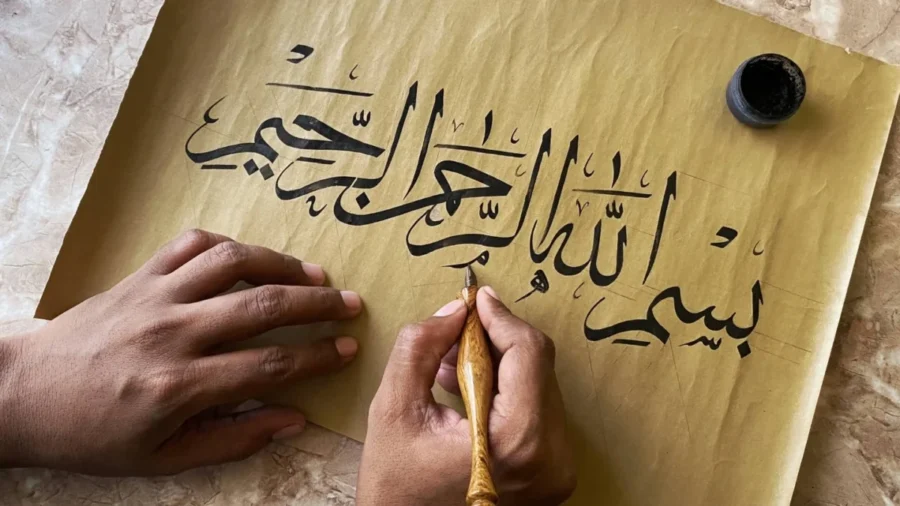
Naskh is the cornerstone of Arabic typography. Developed and refined over many centuries, it became the standard script for printed Arabic text from the earliest moveable-type printing presses to modern digital interfaces. Its letterforms are balanced, clear, and governed by precise proportional rules. If you need Arabic text to be readable — in a document, a website, educational materials — Naskh is the correct choice.
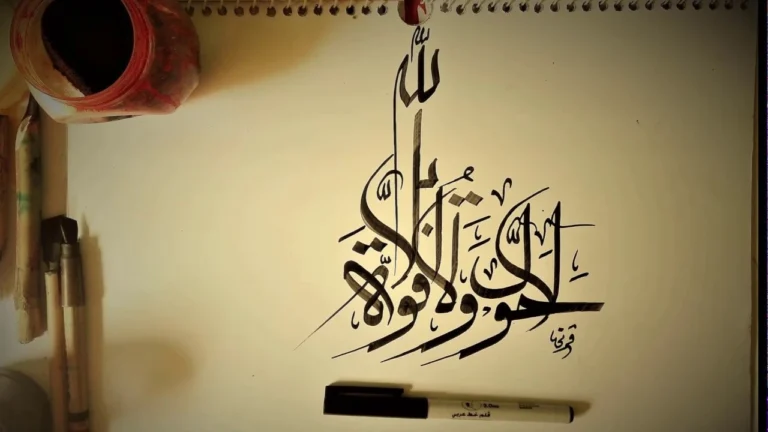
Thuluth is the most prestigious and visually dramatic of the classical Arabic scripts. Its large letterforms, sweeping curves, and complex proportional relationships make it the style most associated with religious inscriptions, mosque decorations, and high-prestige calligraphic art. When a design needs to communicate cultural authority, spiritual significance, or artistic gravitas, Thuluth is the appropriate choice. It is significantly more complex than Naskh and requires more careful compositional management.
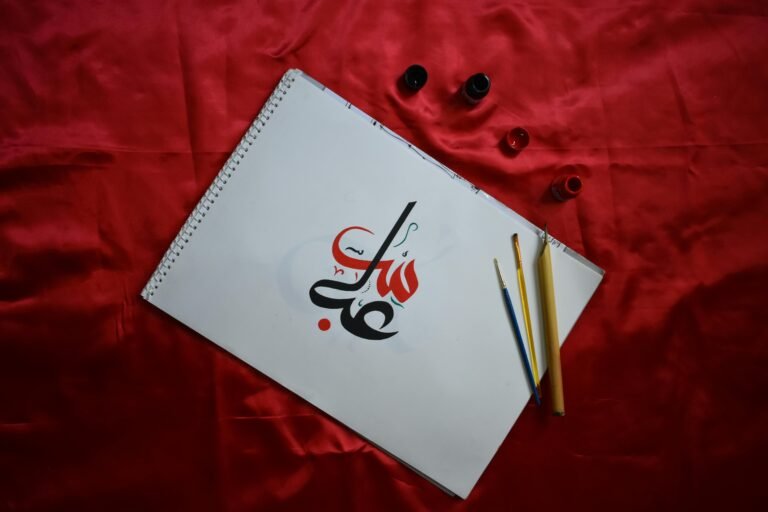
Diwani was developed in the Ottoman imperial court during the 16th century as an administrative script, but evolved into one of the most romantic and decorative of all Arabic styles. Its defining characteristic is extreme fluidity — letters connect in dramatic arcing forms that give entire words a flowing, almost musical quality. Diwani is by far the most popular choice for personalised name art, wedding stationery, and any application where romantic elegance is the desired feeling.
Kufic is the oldest Arabic script and the most visually distinctive. Where all other major Arabic styles are cursive and flowing, Kufic is geometric and angular — built from straight lines, right angles, and precise geometric proportions. This makes it the most architecturally minded of the Arabic scripts, extensively used in tile work, stone inscriptions, and architectural decoration throughout the Islamic world. In modern design, Kufic has found a large contemporary audience for logo design and brand identity work, where its bold geometric character translates extremely well to digital and print contexts.
Ruq’ah is the practical everyday handwriting style used across the Arab world. Unlike the formal classical styles, Ruq’ah was designed for speed and efficiency without sacrificing elegance. Letters are simplified compared to Naskh, with fewer ligatures and a more consistent baseline. It is the script that most educated Arabic speakers actually use when writing by hand. For any application that wants to feel personal, approachable, and contemporary rather than formal or monumental, Ruq’ah is the right choice.
Nastaliq is the defining script of Urdu and Persian calligraphy. Its dramatic diagonal flow — where each word cascades gently downward from right to left — gives it a visual beauty unlike anything in the Arabic calligraphy family. It is the script of classical South Asian poetry, of literary culture, and of national identity across Pakistan and Iran. For projects with any connection to Urdu, Persian, or South Asian Muslim heritage, Nastaliq is not merely an aesthetic preference but a cultural necessity.
Explore modern Arabic calligraphy
Choosing the Right Style for Your Project
The most common mistake beginners make with Arabic font generators is choosing a style based purely on visual appeal without considering whether it is appropriate for the intended use.
For logos and brand identity: Kufic and Thuluth are the strongest choices. Kufic’s geometric precision scales beautifully to any size and reproduces well in both print and digital contexts. Thuluth’s dramatic forms make an immediate visual impact that communicates cultural depth and prestige.
For wedding invitations and romantic personal projects: Diwani is almost always the right choice. Its flowing, romantic character is perfectly suited to contexts where emotion and personal connection are the priorities.
For educational materials and readable documents: Naskh is the only appropriate choice. Other styles sacrifice readability for decorative impact in ways that make extended reading genuinely difficult.
For social media content: All styles work depending on the context and audience. Diwani and Thuluth produce the most visually striking single-word or short-phrase compositions for visual platforms. Kufic works very well for brand-associated content where consistency and recognisability matter.
For personalised gifts and name art: Diwani is the most popular, but Naskh works well when the recipient’s name contains letter combinations that flow particularly well in that style. Generating the name in multiple styles and comparing is always worth doing.
How to Use an Arabic Font Generator Effectively
Getting genuinely good results from an Arabic font generator requires a little more than simply typing and clicking. Here are the practices that produce the best outcomes.
Start by generating the same text in all available styles. The differences can be dramatic and surprising — a name that looks elegant in Diwani might look even more striking in Thuluth, or vice versa. Always compare before committing.
Keep text short for decorative applications. One to three words produce the most coherent and visually pleasing calligraphic compositions. Longer texts work in readable styles like Naskh but lose coherence in decorative styles like Diwani.
Consider the final use context when choosing export format. For print use, SVG format is essential — it scales to any size without quality loss. For web use, high-resolution PNG (at least 300dpi) is appropriate for most purposes. For social media, PNG at screen resolution is sufficient.
Use the generator as a learning tool, not just a production tool. If you are curious about Arabic calligraphy as an art form, studying the generator’s output carefully — examining how letters connect, how proportions vary, where curves tighten and loosen — teaches you a great deal about the underlying logic of the style.
Arabic Fonts for Social Media and Digital Content
One of the largest practical use cases for Arabic font generators is creating distinctive visual content for social media platforms. Arabic calligraphy has qualities that make it particularly effective in this context.
The visual richness of Arabic calligraphic styles — particularly Diwani and Thuluth — creates immediate visual impact in a social feed dominated by generic template-based content. A post featuring authentic Arabic calligraphy has a visual distinctiveness that attracts attention and communicates cultural depth.
For creators serving Arabic-speaking or Muslim audiences, using authentic calligraphic styles rather than generic Arabic fonts signals respect for the tradition and resonates with audiences who have aesthetic preferences formed by genuine calligraphic culture.
For international creators, Arabic calligraphy carries a global romantic and cultural appeal that transcends language barriers — many non-Arabic speakers find the visual beauty of the script compelling regardless of whether they can read it.
Popular Arabic Calligraphy Font Styles
Arabic typography comes in many artistic forms. Here are the most common styles used in 2026:
| Font Style | Description |
| Kufi | Geometric, bold, perfect for logos and headings |
| Naskh | Traditional, elegant, highly readable script |
| Diwani | Flowing and decorative, ideal for invitations and poetry |
| Thuluth | Majestic, large script often used in religious and artistic inscriptions |
| Ruqa’a | Simple, everyday handwriting style |
All of these can be found in Arabic calligraphy fonts online for free, ready for saving or generator use.
The styles covered in this guide represent the core classical tradition. For a broader view of how Arabic typography developed across different cultures and regions, the guide to regional Arabic font styles covers Jawi, Khat, Urdu Nastaliq, and Kufi in depth — each with its own history, visual character, and modern design applications.
Free Arabic Fonts for Offline Use
For users who need Arabic fonts integrated into design software rather than generated as images, several high-quality free font resources are available.
Google Fonts offers an Arabic collection that includes professional-quality typefaces suitable for web and print use. The collection includes both serif and sans-serif Arabic designs alongside more calligraphic options.
DaFont and FontSpace both maintain Arabic calligraphy sections with free downloadable fonts in TTF and OTF formats. Quality varies significantly, so previewing carefully before downloading is worthwhile.
For professional design work, the Adobe Fonts library — available with Creative Cloud subscriptions — includes several high-quality Arabic typefaces that integrate directly with Photoshop, Illustrator, and InDesign.
The key distinction between using a font file and using a generator is flexibility versus quality. Font files offer more integration with design software but may not produce the same level of calligraphic authenticity as a purpose-built generator. For most design projects, the best workflow uses a generator for initial exploration and exports the chosen style as an SVG for integration into the final design.
Latest Developments in Arabic Font Technology (2026)
Arabic typography technology is advancing in several exciting directions.
Variable Arabic fonts — which allow continuous adjustment of weight, width, and optical size within a single font file — are becoming more widely available. This gives designers much greater flexibility in how they use Arabic typefaces without needing multiple separate font files.
AI-assisted kerning and composition tools are improving the quality of Arabic text setting in standard design software. Historically, automatic typesetting of Arabic script has been technically challenging due to the contextual nature of Arabic letterforms. AI is making significant progress on these challenges.
Browser-based rendering of complex Arabic calligraphic styles is improving as well — allowing web designers to use more sophisticated Arabic typography without relying on image exports.
Frequently Asked Questions
Can I use Arabic font generators for commercial projects?
Usage rights vary by platform and by the specific fonts used. Always check the licensing terms of any tool or font you plan to use for commercial purposes. Many generators and font resources offer free personal use with paid commercial licensing.
Do Arabic font generators work with all languages?
Most generators work with Arabic script languages, which include Arabic, Urdu, Persian, Pashto, and several others. The specific languages supported vary by tool — check before using for non-Arabic languages.
What is the difference between an Arabic font and Arabic calligraphy?
Arabic fonts are digital typefaces designed for text setting — they prioritise consistency and readability. Arabic calligraphy is an art form with hand-made origins — it prioritises aesthetic expression and cultural authenticity within specific stylistic traditions. High-quality generators attempt to produce calligraphic output rather than simply fonted text.
Explore all the major Arabic calligraphy styles and generate your own designs free at the Arabic Calligraphy Generator.