
Arabic Calligraphy Wedding Invitations — Design Guide + Free Generator
A arabic calligraphy wedding invitations is the first impression receive guests of your wedding. For couples with Arabic, Muslim, South Asian or Eastern Middle backgrounds — or anyone for who appreciates the elegance of Arabic script — calligraphy transforms a invitation from piece of paper into a of art piece.
This guide everything covers you need know about designing arabic calligraphy wedding invitations in 2026, including style selection, traditional phrases, color palettes and a step-by-step process for creating your design own using the Arabic Calligraphy Generator— free completely.
Why arabic calligraphy wedding invitations?
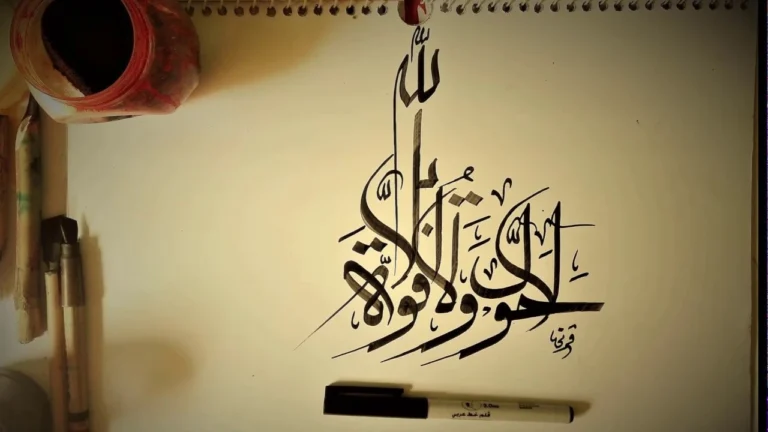
Arabic calligraphy carries weight that fonts standard replicate cannot. It is a 1,400-year-old art form that has been used to inscribe the most sacred grand most and the most texts beautiful in the Islamic world. When your names are written in Diwani or Thuluth script, they carry that with them history .
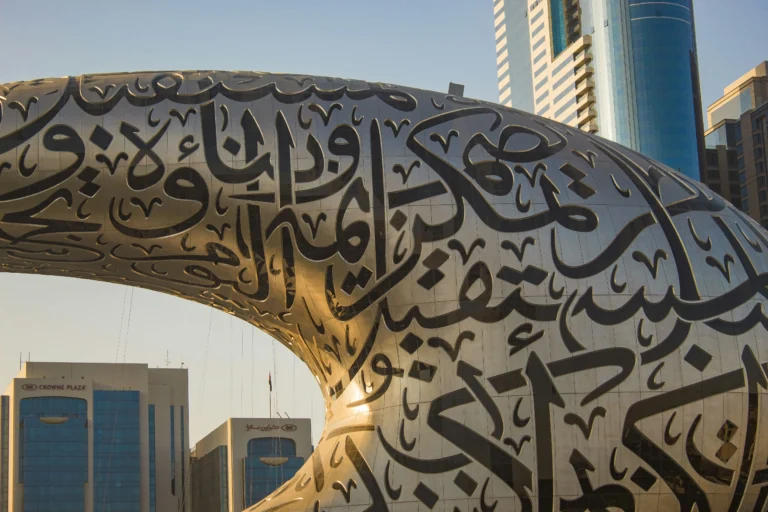
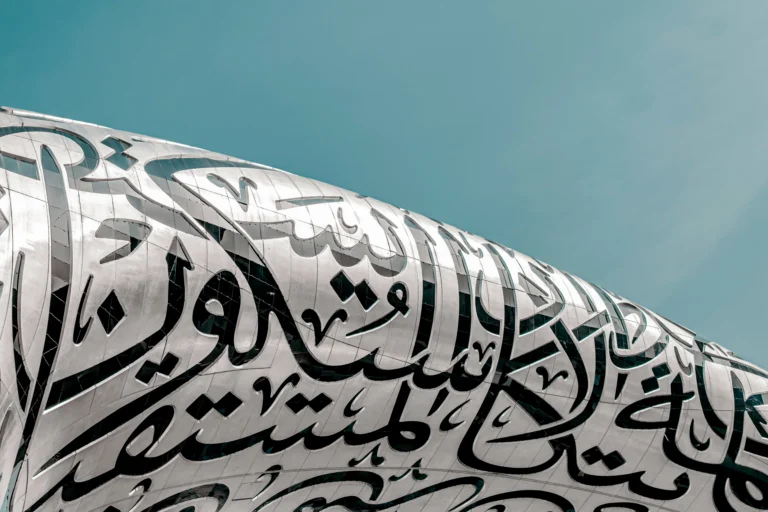
Beyond significance cultural, Arabic calligraphy is simply stunning visually . The flowing lines, dynamic letterforms, and directional energy of right-to-left script create compositions that typography Western rarely matches for sheer drama visual. Even guests who cannot read Arabic immediately the artistry recognize.
There is also a growing trend in luxury arabic calligraphy wedding invitations globally stationery. Arabic calligraphy is increasingly used by non-couples Arabic who want an alternative to typography conventional . The complexity script and elegance have made it design popular choice in high-end stationery studios worldwide.
Right Calligraphy Style Choosing for Your Wedding
The style you choose sets entire tone of invitation your. Here are the four most popular options for stationery arabic calligraphy wedding invitations : all Arabic calligraphy styles explained
Diwani is the widely used style most for invitations arabic calligraphy wedding invitations. Developed in the imperial Ottoman court in the 16th century it was specifically for formal created documents and official correspondence. Its rounded letterforms flowing carry an air of romance and luxury. Diwani Jali — the version decorative — adds ornamental dots and fills that make it more even elaborate. If you want your invitation to warm feel, romantic and celebratory, Diwani is the natural choice.
Thuluth is more formal and architectural. Its tall elongated letters with upstrokes dramatic make it the style most associated with inscriptions mosque and grand ceremonial texts. On a arabic calligraphy wedding invitationsinvitation, Thuluth works best for the opening blessing or a single prominent phrase, rather than for names and details. It signals grandeur and solemnity.
Naskh most is legible Arabic script. Clean, rounded and structured, it suits minimalist modern weddings where readability is as as aesthetics important . If your invitation is bilingual (Arabic and English), Naskh pairs cleanly with modern English typefaces without visual conflict creating . Thuluth vs Naskh for formal occasions
Nastaliq is script of poetry Persian and literature Urdu . It flows diagonally page across with a lyrical, cascading quality that no other script matches. For Pakistani, Iranian or arabic calligraphy wedding invitationsSouth Asian—or for couples with roots in these traditions—Nastaliq carries cultural resonance deep .
You can preview all styles four on the Arabic Calligraphy Generator before committing to design any.
What Phrases Arabic Are Used on Wedding Invitations?
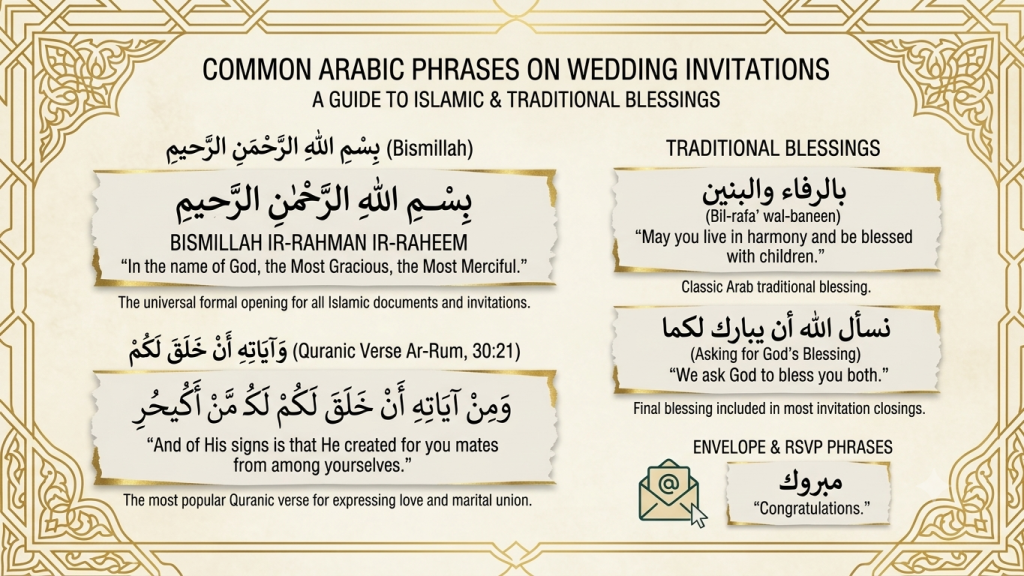
Traditional Arabic and wedding Islamic invitations typically open with a blessing and include ceremonial specific phrases. Here are the commonly most used: Islamic wedding phrases
بِسْمِ اللَّهِ الرَّحْمَنِ الرَّحِيمِ
Bismillah ir-Rahman ir-Raheem
“In the name of God, the Most Gracious, the Most Merciful.”
This is the most universal opening. Almost every formal Arabic document begins with it.
وَمِنْ آيَاتِهِ أَنْ خَلَقَ لَكُمْ مِنْ أَنفُسِكُمْ أَزْوَاجًا
Surah Ar-Rum, 30:21
“And of His signs is that He created for you mates from among yourselves.”
The most popular Quranic verse for arabic calligraphy wedding invitations.
بالرفاء والبنين
Bil-rafa’ wal-baneen
“May you live in harmony and be blessed with children.”
A traditional Arabic arabic calligraphy wedding invitations blessing.
مبروك
Mabrook
“Congratulations”—used on envelopes and RSVP cards.
نسأل الله أن يبارك لكما
We ask God to bless you both.
A closing blessing from the hosts to the couple.
Step-by-Step Design Process
Here is how to create your Arabic calligraphy wedding invitation design for free:
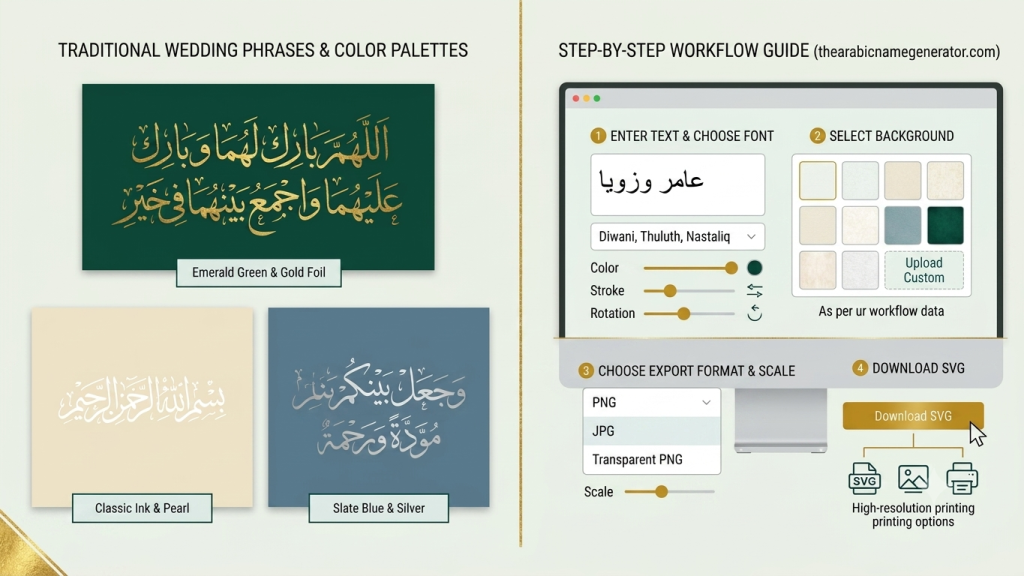
Step 1—Decide on your phrase or names
whether Choose you want the opening Bismillah, a Quranic verse, the couple’s names or a combination. Keep the calligraphic portion to a element single focal—too many calligraphic pieces on one invitation create noise visual .
Step 2—Open the Arabic Calligraphy Generator
Go to thearabicnamegenerator.com. Type or paste your Arabic phrase or the couple’s names. The tool accepts both Arabic and English input.
Step 3—Select your calligraphy style
For most wedding invitations, start with Diwani. If you want something more formal, try Thuluth. Toggle between styles to compare the look before committing. couple name generator
Step 4—Adjust size and color
Set the size font large enough to be the anchor visual of your design. For gold calligraphy on card ivory , set the fill color to #C9A84C or #B8960C. For black on white, the default keep . write both names in Arabic
Step 5 — Choose a transparent background
Select “PNG Transparent” as your format export . This lets you drop the calligraphy onto invitation design any in Canva, Adobe Illustrator, or Word without a box behind white it.
Step 6 — Export at 3x scale
For quality print at invitation size card (typically A5 or 5×7 inches) export at scale 3x. This gives you a resolution high file suitable for printing professional .
Step 7—Place in your invitation template
Import the transparent PNG into Canva, Word, or your design tool of choice. Position it as the header or centerpiece of your invitation layout. Canva wedding templates
Color Palettes That Work with Arabic Calligraphy
choices Color make or break a invitation Arabic calligraphy. Here are proven three combinations:
Gold on ivory—the classic choice. gold Deep (#B8860B) calligraphy on an ivory or card stock cream creates a timeless, formal look that suits any style wedding from traditional to luxury modern . This combination is also the easiest to pair with typography English .
White on burgundy deep or navy—a bold, choice contemporary . White calligraphy on a jewel rich-tone background creates visual contrast dramatic . Works exceptionally well for weddings evening and celebrations Walima .
Black on pink blush or sage green—for modern, traditional non weddings. Clean black Naskh calligraphy on botanical soft color creates an elegant, fashion-invitation forward that bridges Arabic and contemporary design aesthetics. Islamic wedding ceremony
DIY vs Professional Calligrapher — When to Hire
For invitations, save-the-dates digital and print-at-home designs the produces generator results that are more than sufficient. The letter is correct shaping calligraphic forms are authentic and the quality is suitable export for home and professional up to A4 size printing.
A calligrapher is worth hiring professional when you need hand-lettered envelope addressing (a popular luxury wedding detail) large-format pieces over A3 size printed or bespoke composed pieces that multiple calligraphic elements combine into a single artistic composition. Commissioned calligraphy for high-end weddings typically starts from $200 to $800 on complexity depending .
For couples most generator produces the element Arabic calligraphy and a local print shop handles the card production physical. This combination costs a fraction of hiring a designer while still professionally beautiful results producing .
Avoid Mistakes Common
The important mistake most to avoid is using decorative Arabic fonts of proper calligraphy instead. Many fonts labeled “Arabic calligraphy” in design tools are display fonts actually that do not respect correct letter connection rules. To Arabic readers, the result incorrect looks. The generator uses shaped calligraphic forms properly.
The second mistake is mixing incompatible styles. Using for the opening verse Diwani, Kufic for names, and Nastaliq for the date creates a chaotic invitation visually. Choose one calligraphic style and it consistently across apply all Arabic elements. wedding art calligraphy wall
The third mistake is designing at screen resolution and sending to print. Always export at a 3x scale minimum. For offset printing professional , ask your printer whether they require 300 dpi at final size—if so, adjust your scale accordingly.
Conclusion
centuries of artistic tradition Combine with the personal meaning of your day wedding. Whether you choose for its romantic flow Diwani, Thuluth for its grandeur or Naskh for elegance modern script turns a functional document into a keepsake lasting .
With the Arabic Calligraphy Generator, you can your design today create —free, instant, and with no experience required design.