Arabic Calligraphy Generator
Create Arabic calligraphy for tattoos, name art, wedding invitations, gifts, and logo design — free and instant
Trusted by 29,000+ users monthly — Popular with designers, artists, and tattoo enthusiasts in the United States, United Kingdom, and Canada
Background
Export
Master Arabic Calligraphy — Educational Resources
Learn the art, history, and technique behind beautiful Arabic calligraphy
📚 Beginner’s Learning Path
New to Arabic script? This structured guide takes you from the alphabet and letter connections through all five calligraphy styles — no prior knowledge needed.
- 28 Arabic letters & contextual forms
- Kufi, Naskh, Thuluth, Diwani, Nastaliq
- Cultural sensitivity guidelines
- Hands-on practice exercises
🎨 Design Tutorials
Step-by-step project guides for real creative work. Each tutorial covers style selection, tool settings, color palettes, and export for print or digital.
- Wedding invitation design
- Arabic business logo creation
- Name art & quote posters
- Professional printing guide
🖼️ Gallery & Inspiration
Browse hundreds of real designs created with this generator — organized by category to help you find exactly the style and approach you need.
- Wedding & event designs
- Business logos & branding
- Name art showcase
- Islamic phrases & quotes
🕌 Complete Arabic Calligraphy Styles Guide
Understand the history and proper use of every major script — from 7th-century Kufi to 16th-century Diwani — so you choose the right style before you design.
▶️ How to Use the Arabic Calligraphy Generator (Step-by-Step Tutorial)
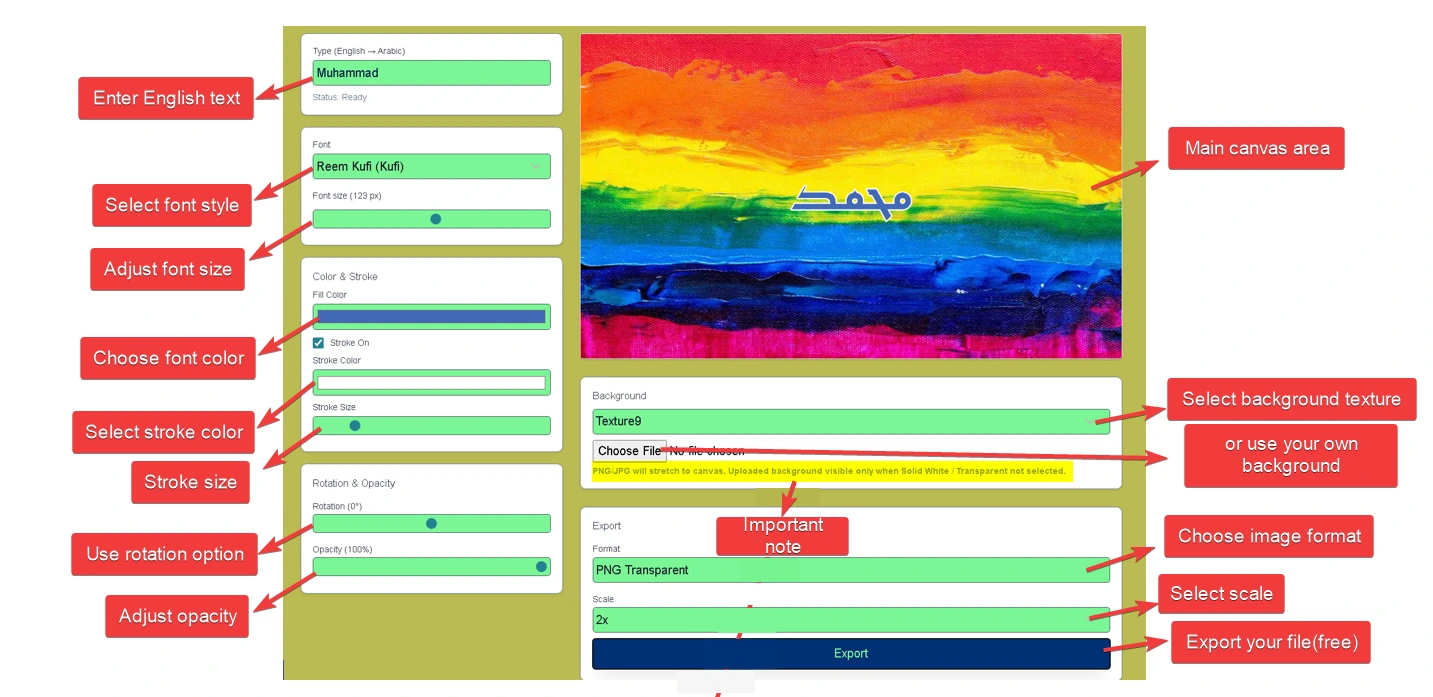
🖥️ Interface Guide
How This Generator Works
Type a name, word, or short phrase in English into the box above, and the tool converts it into Arabic script using Google’s transliteration engine, then offers several possible spellings to pick from. Once you choose one, you can switch between traditional calligraphy styles Kufi, Naskh, Thuluth, Diwani, and more and adjust size, color, stroke, rotation, and background before exporting.
This matters because Arabic letters change shape depending on where they sit in a word a letter written at the start, middle, or end of a word looks different, and some letters never connect to the one after them. A generic Latin font simply swaps characters one-for-one and breaks this joining logic, which is why plain text tools often produce Arabic that looks disconnected or wrong to a native reader. This tool relies on proper Arabic script rendering so the connections stay correct no matter which style you pick.
Calligraphy Styles at Glance
Each script developed for different purpose and picking right one changes how your design reads. A quick reference:
For the full history behind each style, see our Arabic calligraphy fonts guide.
Step by Step
Watch the walkthrough
What People Use It For
Tattoo previews
See how a word or name will actually look in correctly connected Arabic script before it’s permanent, then export a high resolution reference for your tattoo artist. Always have the final wording checked by a native Arabic speaker before getting inked small letter order mistakes are common and hard to undo. More on this in our tattoo design guide.
Wedding and event design
Diwani and Thuluth well work for invitations and backdrops because of their ornamental flow. Export as transparent PNG and drop it straight into Canva, Word or print template.
Logo and branding
Preview a business or restaurant name across several styles before commissioning a designer Kufi tends to suit modern, minimal branding, while Thuluth reads as more formal and traditional.
Gifts, wall art, and social posts
Write a name for a mug, frame, or phone case, or create Arabic quote graphics sized for Instagram and Pinterest. Everything exports at print ready resolution when you select the 3x scale.
Learning Arabic script
Arabic is mostly built from three letter roots and each letter can take up to four different shapes depending on where it falls in word. Watching how a single name changes shape across Kufi, Naskh, and Diwani side by side is one of the more direct ways to notice these joining rules which is why teachers sometimes use tools like this one alongside a proper alphabet course, not instead of one. For a structured lesson plan, our beginner’s learning path covers the alphabet and letter connections in order.
When You Need a Professional Instead
This tool is built for names, short phrases, and design previews it’s not a substitute for a trained calligrapher. Large Quranic compositions, museum quality pieces or anything requiring hand balanced proportion across full page still call for someone who has studied craft for years. Use this generator to explore quickly ideas and cheaply, then bring in specialist for work that needs that level of precision.
About This Tool
This tool was built by Ghulam Mustafa, a digital designer who kept running into the same problem: quality Arabic calligraphy tools were either locked behind expensive paid software or required design skills most people don’t have. So it was built from scratch to be free, instant, and usable by anyone no sign-up, no software, just type and export. It’s continuously improved based on feedback from the small team behind it.
We support 13+ traditional styles, including Thuluth, Naskh, Diwani, nastaliq and Kufi, each rooted in fourteen centuries of artistic heritage. Our goal is to bring this craft into modern, easy to use format without losing structure and meaning behind it.
We’re an independent platform, unaffiliated with any linguistic institution, authority translation or religious organization. Everything here is built around one cultural commitment respect, historical accuracy and creative freedom for everyone who visits.