
Arabic Calligraphy Wall Art — Ideas, Styles & How to Create Your Own
Arabic calligraphy wall art has become one of fastest growing categories in home globally décor. From minimalist apartments in London to traditional family homes Karachi and contemporary in Dubai offices, framed Arabic script now a recognizable feature of design interior across cultures and continents.
This guide covers most popular styles, phrases, strategies placement and color combinations and shows you how to create fully custom Arabic calligraphy wall art for free using the Arabic Calligraphy Generator.
Why Arabic Calligraphy Works So Well Walls on
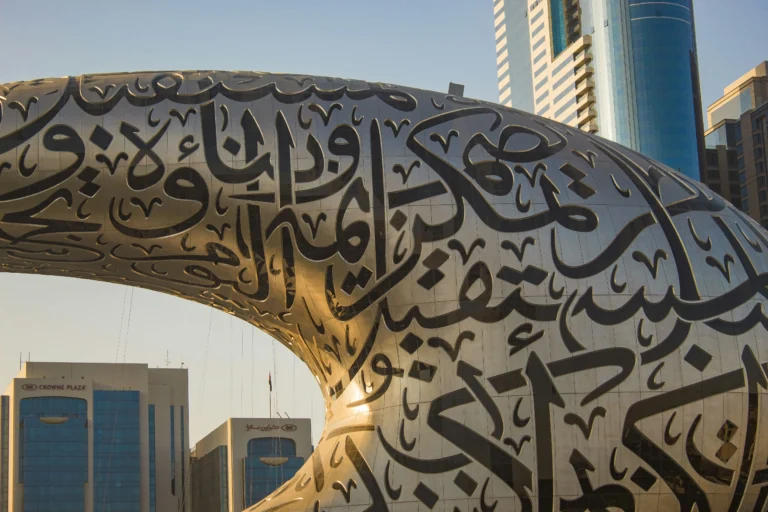
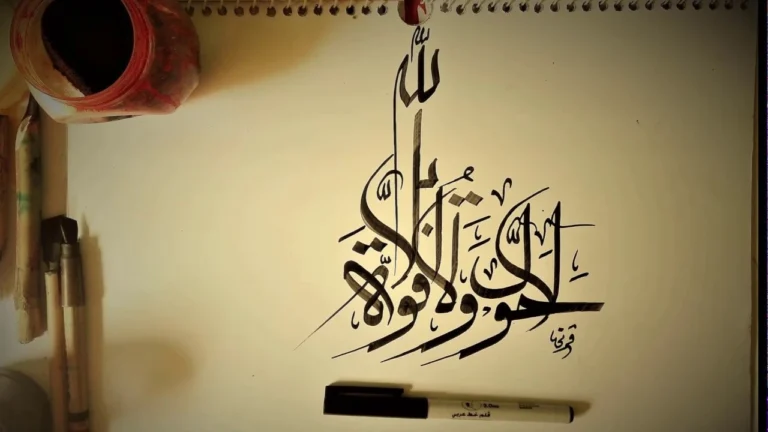
Arabic script has several visual qualities that make especially powerful as art wall. The right to left directionality natural creates flow that draws the across eye composition. The letterforms range from horizontal sweeping curves to dramatic vertical strokes, giving Arabic calligraphy a compositional energy that few other systems writing can match.
Beyond aesthetics, carries Arabic calligraphy meaning. A single word or short phrase in Arabic can represent a intention spiritual , a family value, or cultural identity. When that phrase is rendered in a 1,400-year-old artistic tradition and placed on wall, it communicates deeper something than decoration. It announces matters what in that space. centuries of calligraphic tradition
This is why Arabic calligraphy art wall works well equally in bedroom, a living room, a prayer space, an office and a restaurant. The visual adapts impact to scale and context while the meaning constant remains .
Most Popular Phrases for Arabic Calligraphy Art Wall
Certain phrases consistently appear as art wall because of their universal resonance and beauty visual when rendered in calligraphy: Islamic phrases for wall art
بِسْمِ اللَّهِ الرَّحْمَنِ الرَّحِيمِ — Bismillah ir Rahman ir Raheem
“In the name of God, the Most Gracious the Most Merciful”
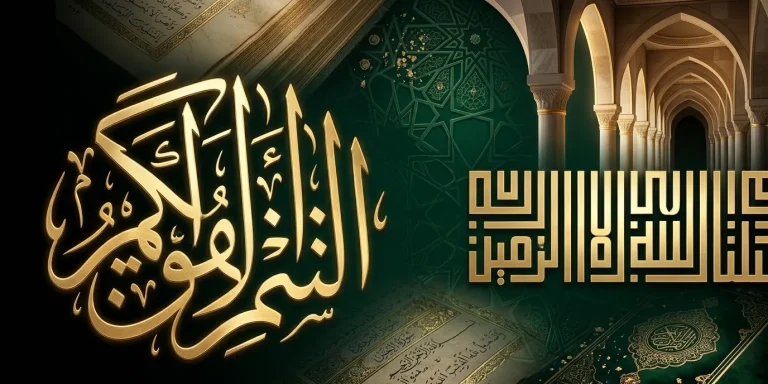
The single most popular phrase for Islamic home décor. Usually placed at the entrance of a home or the living main area. Works in any calligraphy style but striking most in Thuluth. Bismillah calligraphy
الْحَمْدُ لِلَّهِ — Alhamdulillah
“All praise is due to God”
A phrase of gratitude that suits any room. Short enough to be rendered in dramatic Diwani or bold Kufic. Extremely popular as a single-word statement piece.
اللَّهُ — Allah
The single word “Allah” rendered in Thuluth or Diwani is one of forms iconic most in Islamic calligraphy. An entire artistic tradition exists around its composition. A large framed piece in gold on black or white is a focal powerful point for room any.
يَا رَبِّ — Ya Rabb
“O Lord” — a deeply personal expression of devotion. Shorter and more intimate than the Bismillah, it works well in smaller spaces and personal rooms.
صَبْرٌ — Sabr
“Patience” — a single-word concept piece. Clean, direct, and visually minimal while profound carrying meaning. Perfect for modern and interiors minimalist.
Custom Family Names
A family’s surname or the names of family members rendered together in Diwani calligraphy makes a deeply personal art piece. These are among the most personalized popular gifts for housewarming and occasions wedding.
Calligraphy Best Styles for Wall Art
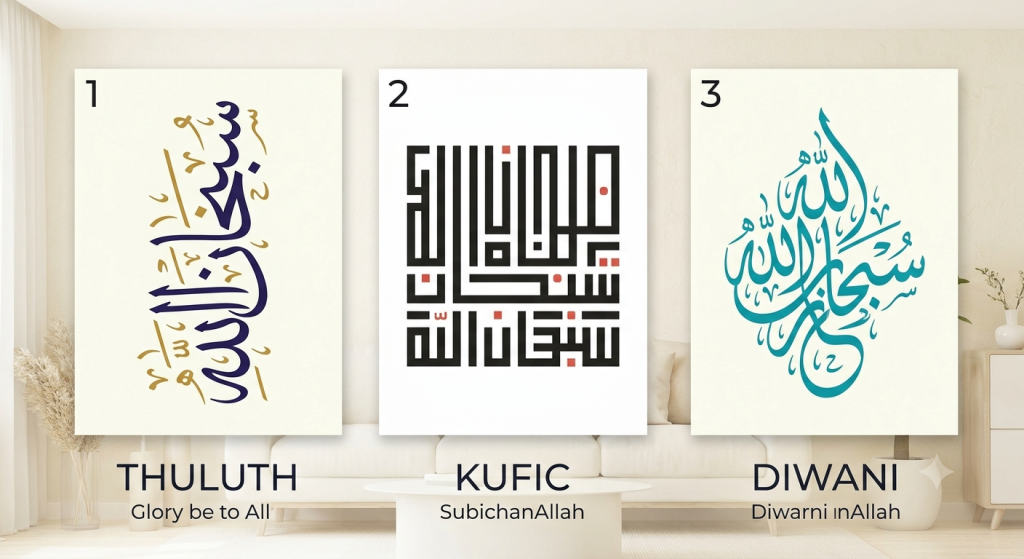
Thuluth is the premier choice for large, dramatic statement pieces. Its tall letterforms create a commanding presence on a wall. Mosque inscriptions worldwide use Thuluth because it commands attention and communicates authority and reverence. Best for: above the sofa, entrance halls, prayer room focal walls. Thuluth for statement wall art
Diwani brings warmth and flow to a space. Its rounded, interconnected letterforms feel organic and alive, making it ideal for living rooms and bedrooms. Diwani Jali — the ornamental variant with elaborate internal decoration — produces especially beautiful large-format pieces. Best for: bedrooms, living rooms, couple name art.
Kufic is geometric and angular, rooted in the earliest Islamic inscriptions. In its form modern , Kufic creates striking abstract quality — the Arabic letters are recognizable but also reminiscent of patterns architectural. Best for contemporary and interiors minimalist , offices and studios home .
Nastaliq has cascading, diagonal flow that is unlike any other tradition calligraphic . Its lyrical quality makes it ideal for poetic content and for homes with Asian South or Persian connections cultural . Best for poetry, rooms study, libraries, interiors traditional .
Size and Placement Guide
Matching the size and placement of your art to the phrase and style is as important as the design itself:
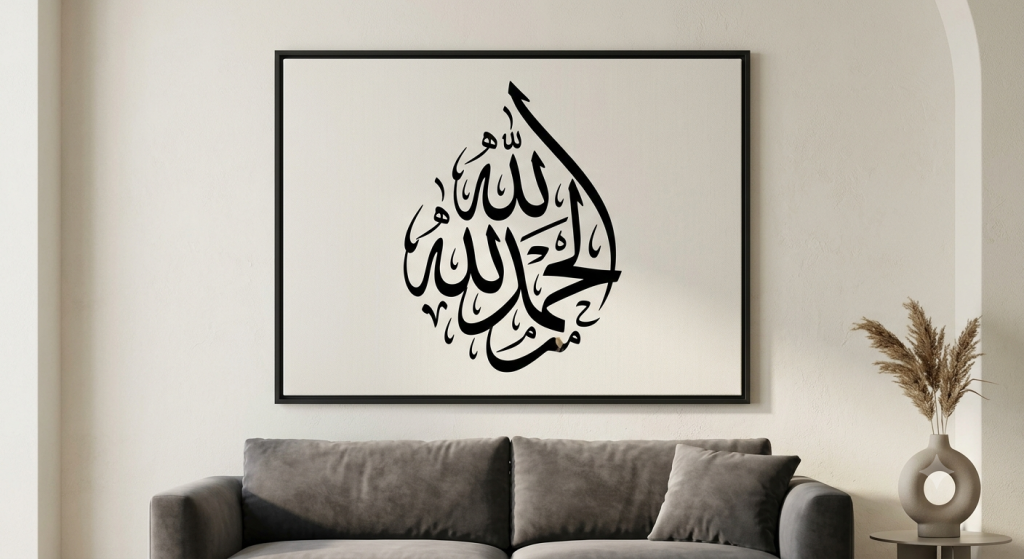
Large canvas above the sofa (60–90cm wide) — The most classic wall art placement. Use a single powerful word like Allah or Alhamdulillah in Thuluth at maximum scale. Gold on black or white on deep color creates a gallery-quality focal point.
Entrance hallway (horizontal banner format) — The Bismillah is placed traditionally at the entrance of a home. A horizontal rectangular piece with the Bismillah full in Thuluth or Naskh, framed in dark wood or thin gold, sets tone for the home entire.
Bedroom (intimate, medium scale) — Couple names in Diwani, or shorter phrases like Ya Rabb or Sabr, work beautifully in bedrooms. Softer colors — blush, sage, deep navy — suit the intimate context better than stark black and white.
Home office or study — Single-word concept pieces (Sabr, Ilm — knowledge, Hikmah — wisdom) in clean Naskh or geometric Kufic work well in work spaces. They motivate without overwhelming.
Kitchen and dining — Short blessings for food and sustenance, or simply Bismillah, are traditional in this space. Smaller pieces (20–30cm) in simple frames suit the kitchen scale.
How to Create Custom Arabic Calligraphy Wall Art for Free
Here is the exact process for creating a print-ready Arabic calligraphy wall art design using the generator:
Step 1 — Choose your phrase or name
Decide on the Arabic text you want. For standard Islamic phrases, you can copy them from this article. For a family name or custom text, type it in English and let the tool convert it. choosing the right Arabic calligraphy style
Step 2 — Open the Arabic Calligraphy Generator
Go to thearabicnamegenerator.com and paste or type your text into the box input .
Step 3 — Select Thuluth or Diwani for most wall art
For traditional or formal pieces, choose Thuluth. For warmer, more personal pieces, choose Diwani. For modern interiors, try Kufic or Naskh.
Step 4 — Set the canvas to match your print dimensions
Adjust the font size so the calligraphy fills the generously canvas. For a square print framing common, set the text to center with balanced white space on all sides.
Step 5 — Set your color
Gold (#B8860B) on white is safest, most choice versatile. White on black creates a dramatic contemporary piece. Black on white is the most print-friendly option for standard home printers.
Step 6 — Choose your background
Select a plain color background white or black for clean art framed. Alternatively, choose Transparent PNG if you plan to add textured or background colored in Canva.
Step 7 — Export at 3x scale
This gives you resolution high file suitable for printing at A4 (21×29.7cm) or 8×10 inch size. For prints larger , go to a print shop and request enlargement from your res high file.
Step 8 — Print and frame
Print at a local print shop on matte art paper or photo paper for best results. Deep black or gold floating frames suit Arabic calligraphy particularly well. personalized name wall art
DIY vs Buying Pre-Made Art
Pre-made Arabic calligraphy art is widely available on Etsy, Amazon, and Islamic art stores. The advantage is convenience — you order and it arrives framed. The disadvantage is that pre-made pieces are generic. The same Bismillah print found in thousands of homes carries less personal meaning. pre-made Arabic wall art
Creating own design using the generator takes less than minutes ten, costs nothing and produces piece that is yours, your chosen phrase your colors your style, printed to the size exact your needs wall. For family names or personalized text there is no alternative to a design custom.
calligraphy Professional commissioned is the premium option for quality museum pieces, large format installations, or heirlooms family. A skilled calligrapher can compose pieces that no generator can replicate fully. For day every home décor, however, the generator produces results that are visually authentic and beautiful genuinely.
Color and Frame Recommendations
The right frame can elevate a simple print to gallery-quality art. Here are the most effective combinations:
Gold calligraphy on black, deep gold frame
The most luxurious combination. Works in any room and suits both traditional and contemporary interiors.
Black on white, thin gold or brass frame
Clean, modern, versatile. The thin frame lets the calligraphy breathe and suits minimalist interiors particularly well.
White on deep navy or forest green, no frame (canvas)
A striking contemporary look. Canvas wraps suit this combination better than traditional frames.
Traditional wooden frame for Nastaliq style
Dark walnut or mahogany complement frames the warm, poetic quality of Nastaliq calligraphy and suit traditional and South Asian aesthetics home.
Arabic Calligraphy Wall Art Gifting
A custom piece of Arabic calligraphy wall art is one of the most gifts thoughtful you can give for a housewarming, wedding, Eid or new baby. It is personal, meaningful, and lasting in a way that gift generic items rarely are.
For a housewarming gift, the Bismillah is the universally appropriate choice. For wedding, the couple names in Diwani or the Quranic marriage verse (Surah Ar-Rum 30:21) are both meaningful deeply. For Eid, Alhamdulillah or a personalized name piece makes a memorable gift that will be displayed for years. wedding calligraphy décor
Conclusion
Arabic calligraphy wall art brings together beauty visual , cultural depth and personal meaning in a way few decorative art forms can match. Whether you choose a word single powerful in bold Thuluth a family name composition in flowing Diwani or a phrase beloved rendered in Kufic geometric, the result is a piece that transforms any space.
With the Arabic Calligraphy Generator, you can design your custom art wall piece today — free, ready print and completely your own.